Survivor's Fire-Making Vote, Explained: Why 15 of 20 Kept It, and What Probst Said Next
By Survivor Tribes · · 4 min read
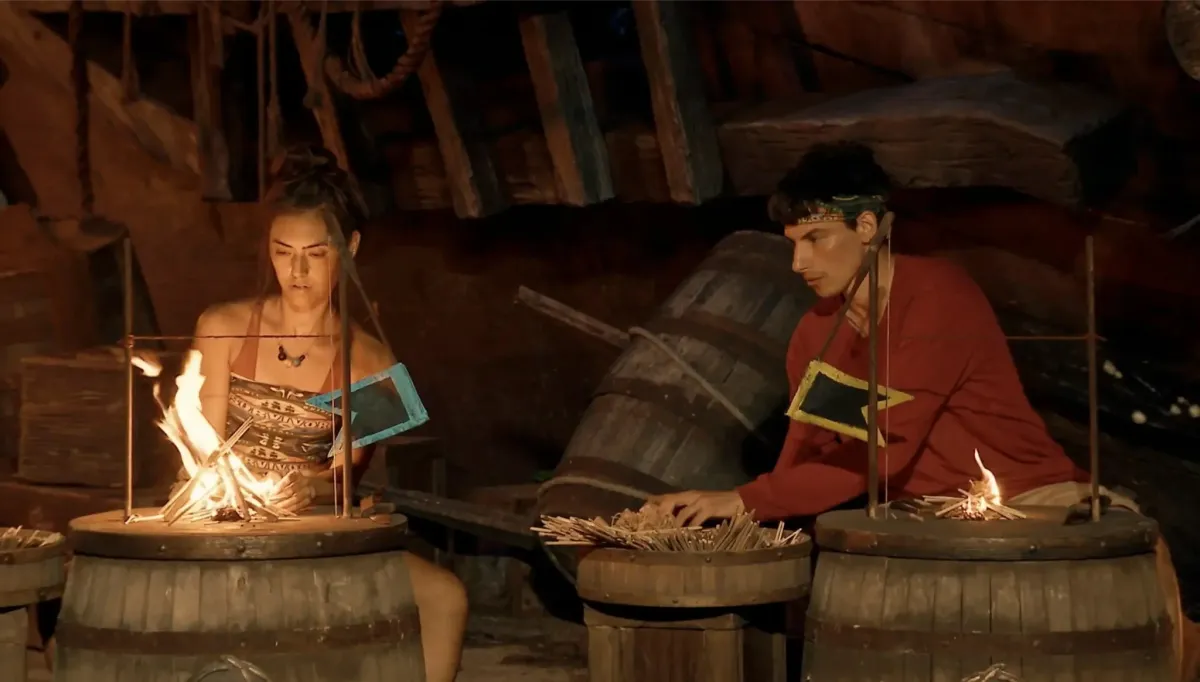
In the Survivor 51 premiere, Jeff Probst offered CBS's Survivor castaways a deal: if they voted unanimously, he would remove the final-four fire-making challenge from their season. Only five of the twenty players in the room raised a hand, so fire-making stays. Probst then spent several minutes of the episode answering the fans who have criticised the rule for years.
What happened in the premiere
Survivor 51 opened with the cast being asked to decide something about the game's ending before any of them had played it. Probst put final-four fire-making to a vote: if every player in the room wanted it gone, he would take it out of their season.
Twenty players were on the mat. The twenty-first, Lewis, had volunteered for Exile Island. Five hands went up in time to count: Kilby, Eric, Kristin, Rob and Sharonda. Patt raised hers a beat late, and it was not counted. It would not have mattered: fire-making stays in Survivor 51.




Then Probst turned to the audience. "Out of twenty of you, only five want to get rid of fire-making," he said, before describing the grief he gets about the twist in restaurants and on social media, and pointing out that the people complaining are not the ones on the beach. That segment, more than the vote itself, is what the fan conversation has been about since. Critics called the vote a formality with a known outcome. Supporters pointed out that the players who actually have to make fire chose to keep it.
What final-four fire-making is
At the final four, the player who wins the last individual immunity chooses one person to join them in the final three. The other two go head to head in a race to build a fire high enough to burn through a rope. The first to do it takes the last seat at Final Tribal Council. The other becomes the final member of the jury.
It replaced a regular final-four vote. Fire itself was not new: since Palau, a 2–2 tie at the final four had been broken with a fire-making duel, and players like Cirie Fields in Panama lost their game that way. What Season 35 changed was making fire automatic. Before it, the three players who were not immune simply voted someone out, and a big threat with no immunity win could be removed without a fight. The glossary entry has the short version.
Why it exists, and why people hate it
Forced fire-making arrived in Season 35, Heroes vs. Healers vs. Hustlers. The argument for it is simple: a strong player who has run the game should get one last chance to earn a seat, instead of being voted out by the people they beat.
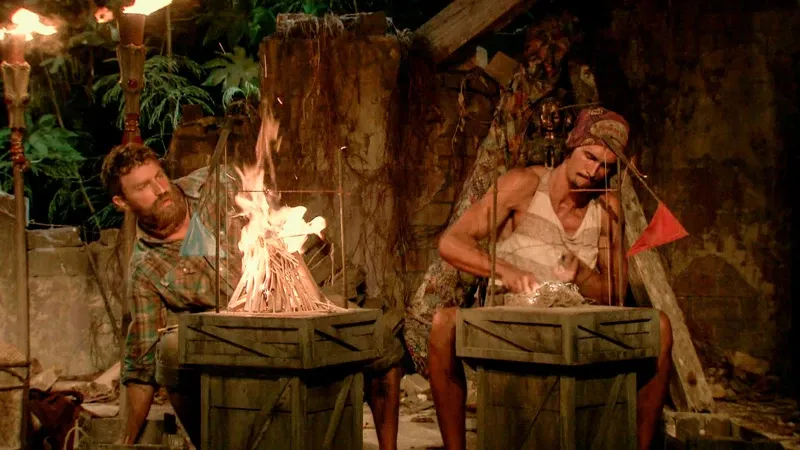
The first forced fire: Ben Driebergen against Devon Pinto in Season 35.
CBS
The argument against it is just as simple. Survivor is a social game, and fire-making lets one physical task undo thirty-odd days of social work. Critics also say it changes the endgame strategy for everyone: the big threat is no longer something to cut at four, it is someone to practise fire against.
Fire-making's biggest moments
- Season 35: Chrissy Hofbeck won the final immunity and took Ryan Ulrich, which sent Ben Driebergen and Devon Pinto to the first forced fire. Ben won it, then won the season. That result defined the argument for the next decade.
- Season 36: Wendell Holland beat Angela Perkins at fire, then won the only tied jury vote in the show's history on the tiebreaker.
- Season 38: Chris Underwood came back from Edge of Extinction, won the final immunity, then gave it away so he could face Rick Devens at fire himself. He won the fire and the season.
- Season 40: Tony Vlachos beat Sarah Lacina at fire in Winners at War, then won the $2 million 12–4–0.
- Season 43: Mike Gabler beat Jesse Lopez at fire, then won 7–1–0.
- Season 50: Aubry Bracco won the final immunity and sent Jonathan Young and Rizo Velovic to make fire. Jonathan won the fire and his seat, then lost the jury vote to Aubry 8–3–0. Season 50's history page has the full endgame.
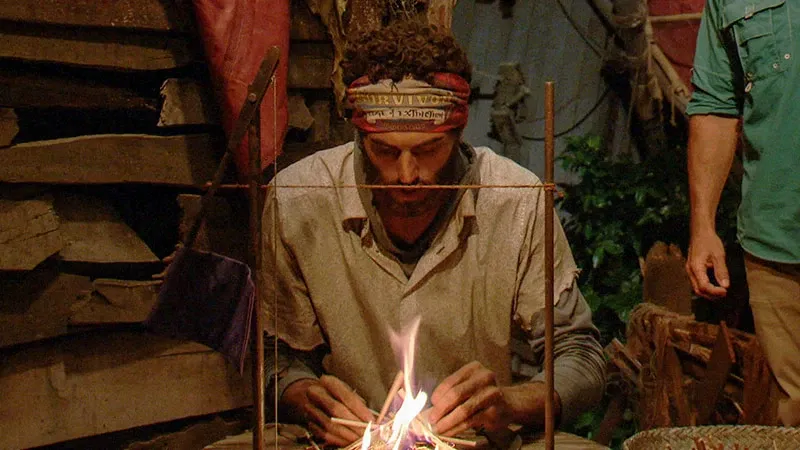
Chris Underwood made fire against Rick Devens in Season 38 and won the season.
CBS
Survivor has a name for the players who lose at fire or at the vote just before Final Tribal: they are the Fallen Angels.
What it means for fantasy
For Survivor 51 fantasy players, fire-making stays live, so plan for it:
- Physical players with no social edge keep a real path to the end. A castaway nobody wants to sit next to at the final vote can still get there by winning fire.
- A final-four fire win scores. Survival at Tribal counts for points, and fire-making is the most dramatic survival in the game.
- The five who voted to scrap it will be asked why. Expect the edit to come back to that vote if any of the five ends up making fire.
Make your call
Vote in this week's prediction polls and see where everyone else landed.
Quick answers
- Did Survivor 51 get rid of fire-making?
- No. Jeff Probst said he would remove final-four fire-making only if the Survivor 51 cast voted unanimously to scrap it. Only five of twenty players voted to remove it, so it stays.
- When did Survivor start the final-four fire-making challenge?
- Forced fire-making at the final four began in Season 35, Heroes vs. Healers vs. Hustlers, and has been part of every season's endgame since.
- Which Survivor 51 players voted to remove fire-making?
- Kilby, Eric, Kristin, Rob and Sharonda raised their hands to remove it. The other fifteen voted to keep it.
Sources: CinemaBlend, Jeff Probst responds to fire-making critics (Sept 24, 2026); Surviving Tribal, Survivor 51 players vote on final-four fire-making; Wikipedia, Survivor 50: In the Hands of the Fans; Survivor Wiki, Fire-making. Survivor Tribes is an independent fan site, not affiliated with CBS.
Related on Survivor Tribes
Keep reading

Is Jeff Probst Retiring From Survivor? What He Has Actually Said About Leaving
Photo: Robert Voets/CBS

Survivor 52: What's Confirmed, What's Rumored, and What We Don't Know Yet
Photo: Robert Voets/CBS

Did Aubry Deserve to Win Survivor 50? Her Win, Re-Litigated With Data
Photo: CBS